Foot Health · Everyday Comfort
The First Ten Steps Out of Bed Tell You More Than Any Shoe Ad Ever Will
A podiatrist with 22 years of clinical experience explains what actually matters when you are managing plantar fasciitis discomfort — and why the drugstore insert in your closet flattened before lunch.
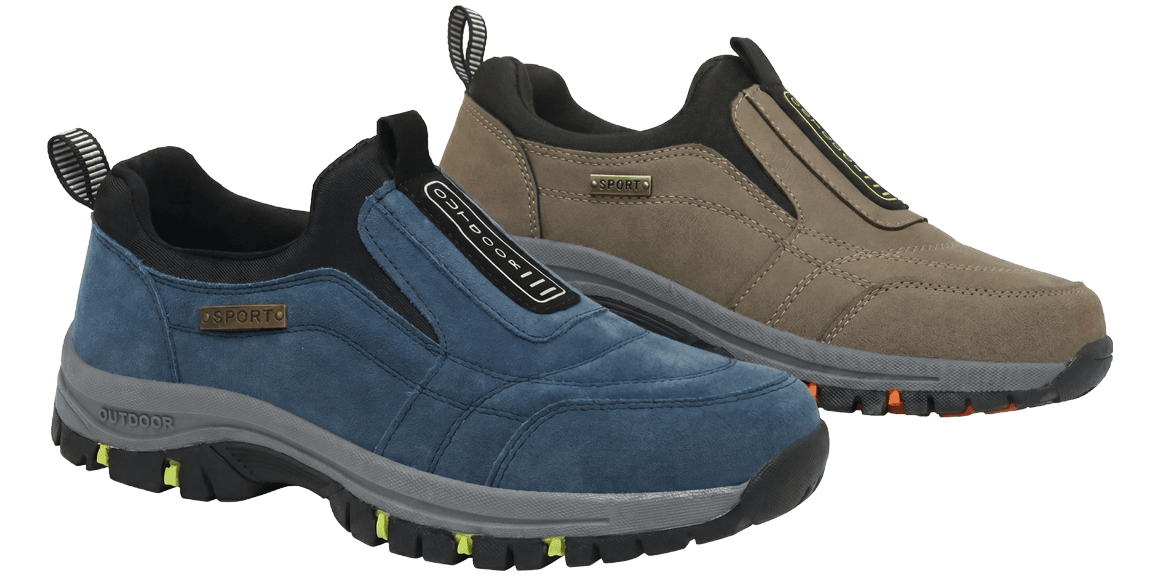
Stepprs makes a slip-on walking shoe built around three unglamorous ideas: a shaped arch, a cushioned sole, and a toe box wide enough that your toes are not stacked on top of each other by the end of a shift. It is meant for people who stand and walk for hours — nurses, teachers, warehouse staff, dog walkers, anyone whose day is measured in steps rather than meetings.
This article is sponsored content. It looks at what the design is intended to do, what it is honestly not, and what any reasonable adult should check before spending money on comfort footwear.
Visit the official Stepprs website to review current availability, sizing, pricing, shipping, returns, and the 90-day money-back guarantee.
Individual results vary. This product is not intended to diagnose, treat, cure, or prevent any disease.
You already know the feeling, or you would not have clicked. Your alarm goes off, you swing your legs over the side of the bed, and the first few steps toward the bathroom feel like you are walking on a bruise. By step twenty it eases. By the time the coffee is poured you have mostly forgotten about it. Then you stand for six hours and it comes back with interest.
In my clinic that story comes up several times a week, and it usually arrives with a plastic bag. Inside the bag: a gel insert, a heat-molded insole, sometimes three different pairs, all bought at a pharmacy, all abandoned. The complaint is remarkably consistent. It felt great for twenty minutes. Then it packed down, the arch went flat, and it ended up rolled in the back of the closet next to the shoes it never quite fit.
The plantar fascia is a thick band of tissue that runs along the bottom of the foot from the heel to the ball. It works a bit like a bowstring: it tensions as you push off and it takes load every time your heel lands. When that tissue gets irritated — from mileage, from standing on concrete, from body weight changes, from footwear that gives it nothing to lean on — the classic pattern is exactly the one above. Worst first thing in the morning, worst again after sitting, then a dull ache under the heel that follows you home.
I am not diagnosing you from a web page and neither is anyone else who writes one of these articles. What I can tell you is what changes the conversation in a fitting room. Soft cushion is comfort. Shape is support. Cushion alone compresses; a foam pad squashed under your body weight for hours is doing very little by hour three. What tends to matter more is whether the shoe holds a form under the arch, spreads load away from a concentrated point under the heel, and gives the front of the foot enough room to work.
Which brings me to the reason this article exists. It features Stepprs walking shoes, the publisher may be compensated if you buy through the links on this page, and I would rather say that in paragraph five than bury it in eight-point type at the bottom. Read it as what it is: a sponsored look at a product, written under the same rules I would use talking to a patient — no cures, no miracles, no promises about your specific foot.
“Cushion is what a shoe feels like in the store. Shape is what it feels like at 4 p.m.”Dr. Sarah Mitchell, DPM
So what exactly is the shoe?
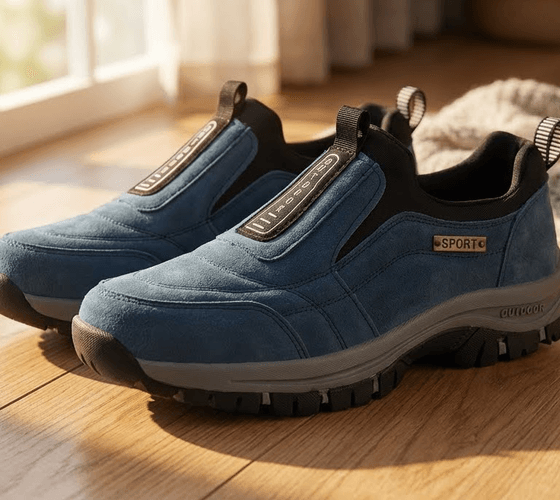
Stepprs Walking Shoes are a laceless everyday shoe. You step in, the elastic panel takes up the slack, the pull tab at the heel does the rest. There is no break-in ritual and no tightening halfway through the day. The brand describes the shoe as developed with input from a podiatrist experienced in footwear design, and positions it for people who are on their feet through long shifts rather than for athletic training.
The rest of this piece walks through the parts of that design one at a time, using the manufacturer’s own material and what is plainly visible in the product photography. Where the brand makes a claim, I have labeled it as the brand’s claim. Advertorial, affiliate links, compensation — noted once more, and then I will stop repeating myself.
How the design is meant to work
Strip away the marketing and a comfort shoe is really answering four questions. Does it hold a shape under the arch, or does it collapse into a flat plank? Does it absorb some of the impact at heel strike instead of passing all of it up the leg? Does the front end let the foot spread as it loads? And can you wear it for eight hours without renegotiating with it?
Stepprs answers those with a contoured footbed, a cushioned midsole, a wide forefoot and a slip-on upper. None of that is exotic. What is worth understanding is why each piece is there, because it tells you whether the shoe is aimed at your day or somebody else’s.
A quick expectation setting note before the chapters: footwear may help reduce pressure under the heel and arch during standing or walking. That is a design intent, not a promise, and it sits alongside the boring things that also matter — how much you are on your feet, what surface you stand on, your stretching, your body weight, and how long you have had the symptom.
Comfort footwear is one of the most oversold categories on the internet. We agreed to publish this advertorial on one condition: no cure language, no invented studies, no fake customer counts, and no before-and-after photographs of anybody’s feet.
Everything described here is either visible in the manufacturer’s photography or stated by the brand and attributed as such. If you are looking for proof that a shoe fixes a medical condition, this is not that article, and you should be skeptical of any article that claims to be.
At a glance
Features visible in the product images or stated by the manufacturer.
- Slip-on upper with elastic side panel and heel pull tab
- Contoured arch support built into the footbed
- Cushioned midsole for shock absorption
- Wide toe box compared with a standard last
- Lugged rubber outsole for grip on uneven ground
- Colorways shown: blue, taupe, black
- Brand states materials avoid silicone and plastics that trap heat
- Brand states 12+ months of normal daily wear is typical; lifespan varies
- Brand states a 90-day money-back guarantee on the official site
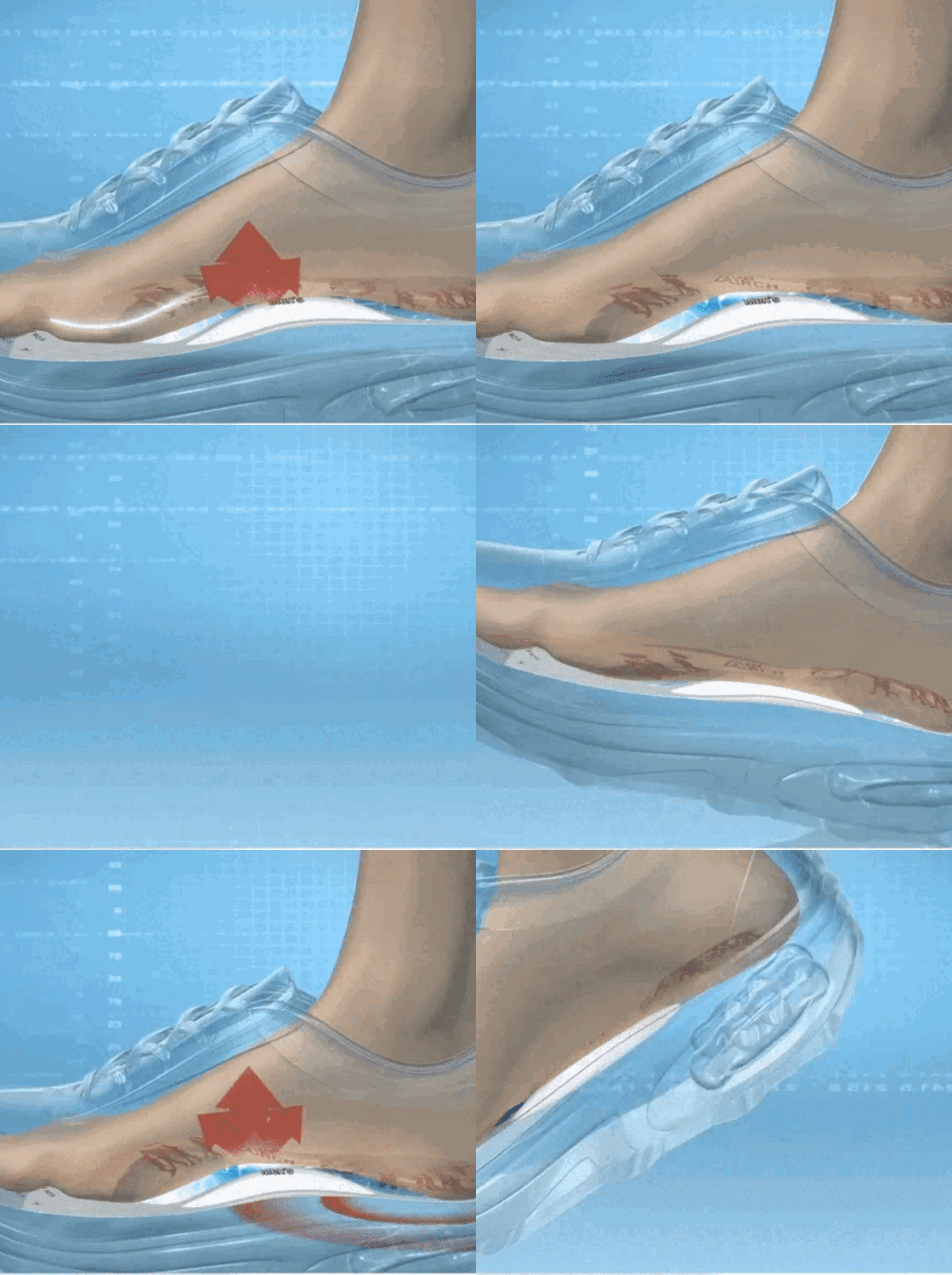
An arch shape that is built in, not dropped in
The reason a two-dollar gel pad disappoints is structural. It is a slab. Put body weight on a slab of soft foam for a few hours and it becomes a thinner slab of soft foam. Whatever contour it started with is gone by mid-morning.
Stepprs takes the opposite route: the contour lives in the footbed of the shoe itself, so the shape under your arch is part of the build rather than something sitting on top of it. The intent is to keep the arch in contact with a surface instead of leaving it hanging over a flat board — which may help reduce pressure under the heel and arch while you are standing or walking.
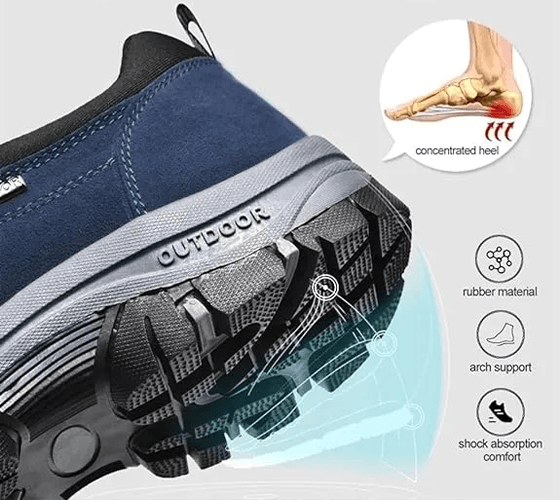
Cushioning under the part of the heel that takes the hit
Heel strike is concentrated. A relatively small area of bone and fat pad meets the ground thousands of times a day, and on tile or concrete the floor gives back nothing. The midsole here is built up under the rear of the shoe to absorb some of that, which is the same principle behind standing mats in commercial kitchens.
Worth saying plainly: cushioning is designed to soften impact, not to treat what is causing your discomfort. If your heel hurts every morning for weeks, that is a conversation with a clinician, not a purchase decision.
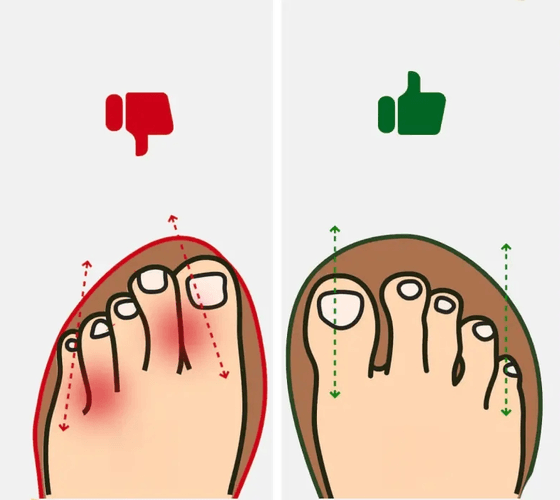
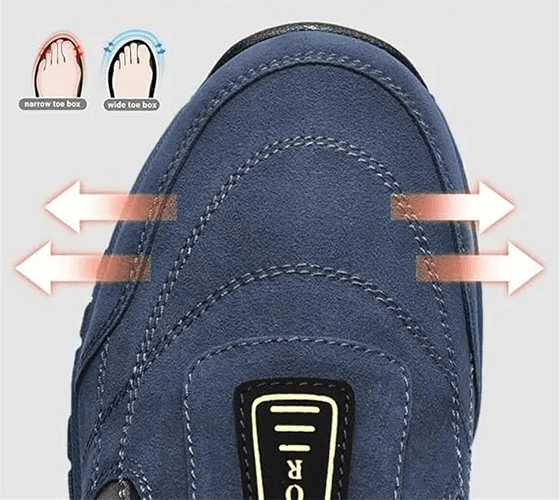
Room at the front, which is where most people get the fit wrong
Look at the illustration alongside this paragraph. On the left, five toes compressed into a tapered point. On the right, the same foot with the toes able to sit flat and slightly apart. Feet also swell across a long day — the shoe that fit at 8 a.m. is not the shoe you are wearing at 6 p.m.
A wider forefoot lets the front of the foot spread as it loads, which is what it is anatomically built to do. It is also the difference between a shoe you happily wear for a double shift and one you kick off in the car.
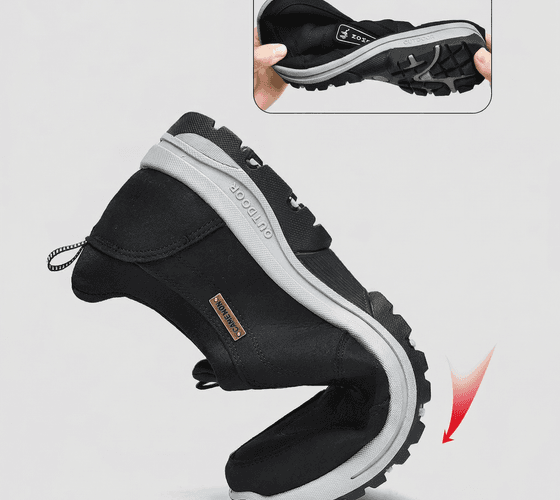
Supportive without being a plank
Support and stiffness are not the same thing, and shoes that confuse them are miserable to walk in. A sole that refuses to bend fights your foot at every push-off; a sole with no structure at all offers nothing to stand on.
What the photography shows is a shoe that twists and flexes under hand pressure while keeping a shaped, built-up sole unit. That is the middle ground most everyday walking shoes are aiming for.
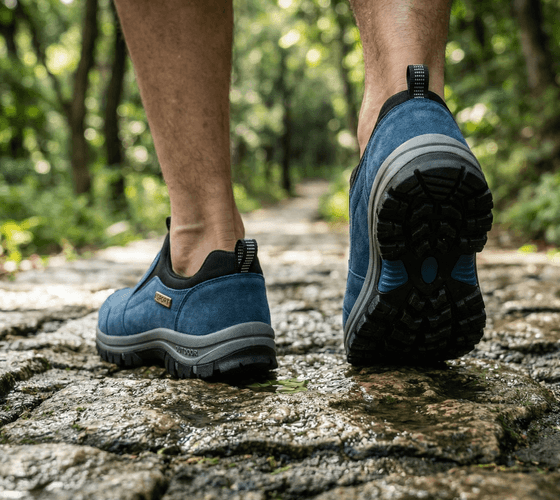
Traction that matters more than people admit
Slipping is not just a fall risk. Micro-slips make you grip with your toes and tense through the calf, and that tension travels straight down into the same tissue that is already unhappy. Walking cautiously on a slick surface is genuinely tiring.
The tread here is a deep-lug rubber pattern rather than a flat city sole, aimed at wet pavement, gravel paths, packed dirt and grass. If your day is split between a hard floor and the outdoors, that is the relevant detail.
Built for the shift, not for the unboxing
Anything is comfortable for twenty minutes. The honest test of a work shoe is hour seven, and that is where laces, hot spots and heat build-up decide whether you keep wearing it.
The slip-on upper removes the tightening-and-retying cycle, and the brand states its construction avoids silicone and plastics that can trap heat. The brand also states a typical pair may last 12 months or more with normal daily wear, though that will obviously depend on your mileage and the surfaces you spend your day on.
Ninety days, and where you actually buy them
Comfort is subjective, which is why a return window matters more here than in most categories. The brand states it offers a 90-day money-back guarantee, and that it sells direct rather than through third-party marketplace listings.
Read the current terms yourself before ordering — who pays return shipping, what condition the shoes need to be in, and how the window is counted. Those details change, and the official site is the only place they are authoritative.
And now the part most advertorials skip: what this is not
These are comfort shoes. They are not a custom orthotic, which is a device made from a cast or scan of your specific foot. They are not a treatment, a therapy, or a substitute for a diagnosis. Nothing in a shoe repairs irritated tissue — at best, footwear changes the load that tissue is dealing with while the rest of the plan does its work.
They also are not a replacement for physical therapy, prescribed treatment, or a visit to a licensed podiatrist. Some people notice more comfort with consistent use; others need a proper assessment, and the second group should not spend three months trying shoes instead. Individual experiences depend on age, activity level, existing footwear, the severity of the discomfort, and how consistently the shoes are worn.
Sensible use, and when to stop
None of this is complicated, but it gets ignored often enough to be worth listing.
- Follow the brand’s sizing guidance and measure your foot rather than assuming your usual number. If you are between sizes or have a wide foot, check their fit notes before ordering.
- Ease into any change of footwear. Wear a new pair for shorter stretches first rather than putting them straight into a twelve-hour shift.
- Replace shoes once the sole is worn down or the footbed has lost its shape. Worn-out supportive shoes are just shoes.
- Stop wearing them if pain, numbness, blistering, redness or irritation increases, and do not use footwear over open wounds or broken skin.
- If you have diabetes, neuropathy, circulation problems, a recent foot injury, open sores or another relevant medical condition, speak with a healthcare professional before changing your footwear.
- Heel pain that persists, gets worse, or comes with swelling, numbness or difficulty walking needs a licensed podiatrist or physician — not another purchase.
Visit the official Stepprs website to review current availability, sizing, pricing, shipping, returns, and the 90-day money-back guarantee.
Individual results vary. This product is not intended to diagnose, treat, cure, or prevent any disease.
Questions people actually ask
Answered the same way I would answer them in a fitting room.
They are designed to support everyday foot comfort for people who stand and walk for long periods. The contoured footbed, cushioned midsole and wider forefoot are intended to spread load and may help reduce pressure under the heel and arch during standing or walking.
They are intended for general comfort and support. They are not intended to diagnose, treat, cure, or prevent any disease or medical condition.
No. A custom orthotic is made for one specific foot after an assessment; a retail shoe is made for a size range. These shoes are not a substitute for medical diagnosis, prescribed treatment, physical therapy, custom orthotics, or professional podiatric care.
If you have been prescribed orthotics, ask your clinician about fitting them into any new shoe before switching.
No, and be wary of anything sold to you on that basis. Footwear can change how load is distributed while you are wearing it. It does not treat or resolve a medical condition.
Some people notice more comfort with consistent use. Others do not, and results may vary from person to person. Persistent or worsening heel pain should be assessed by a licensed professional.
Measure your foot rather than relying on the size you have always bought, and measure later in the day when your feet are at their largest. Compare that measurement against the sizing chart on the official Stepprs site.
The forefoot is cut wider than a standard shoe, so if you normally hunt for wide fittings, read the brand’s fit notes before choosing. Sizing, exchange and return terms are all listed on the official site.
They are designed for regular daily wear — shifts, errands, walks. Start with shorter stretches when they are new rather than committing to a full day immediately.
The brand states a typical pair may last 12 months or more with normal daily wear. Lifespan varies considerably with mileage, body weight and the surfaces you spend your day on, and any shoe should be replaced once the sole is worn or the footbed has flattened.
Anyone with diabetes, peripheral neuropathy, circulation problems, a recent foot or ankle injury, open sores, or another medical condition affecting the feet should consult a healthcare professional before using new footwear.
The same applies if you experience swelling, numbness, difficulty walking, or symptoms that keep getting worse. That is a clinical question, and it deserves a clinical answer.
Disclosures
Stepprs walking shoes are intended for general comfort and support. They are not intended to diagnose, treat, cure, or prevent any disease or medical condition.
This page contains advertorial content and may include affiliate links. The publisher may receive compensation when purchases are made through links on this page.
These shoes are not a substitute for medical diagnosis, prescribed treatment, physical therapy, custom orthotics, or professional podiatric care.
Consult a licensed podiatrist or healthcare professional if heel pain persists, or if you have swelling, numbness, difficulty walking, or worsening symptoms. People with diabetes, circulation problems, neuropathy, recent foot injury, open sores, or other medical conditions should consult a healthcare professional before using new footwear.
Individual results vary. Individual experiences depend on age, activity, footwear, severity of discomfort, and consistent use.